
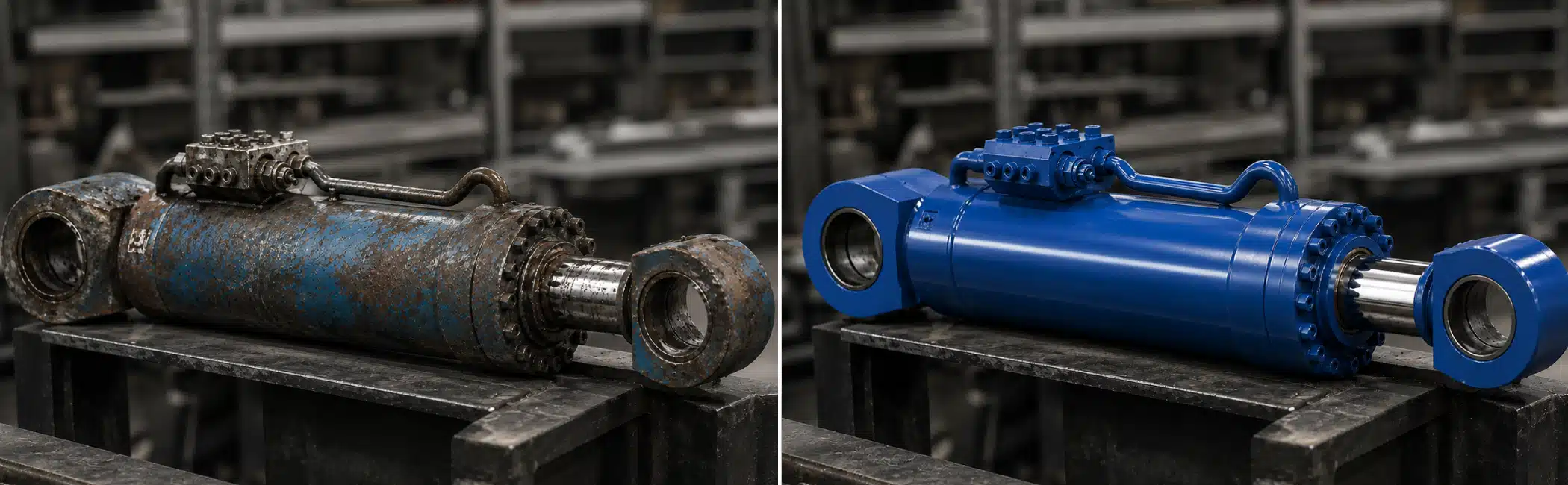
Extend the Life of Hydraulic Cylinders
Not every cylinder should be repaired, and not every failure requires a completely new cylinder. Texas Hydraulics’ engineering and manufacturing teams evaluate the cylinder, review the application and recommend the appropriate path, repair, remanufacture or replacement, based on its condition and operating requirements.
When remanufacturing is the right option, a defined process restores performance, extends service life, and helps identify recurring issues caused by contamination, side loading, pressure spikes, heat or changing duty cycles.
Discuss a Remanufacturing ProgramDownload Bulletin
Why Lifecycle Engineering Matters
Cylinder failures are often influenced by operating conditions—not one isolated component.
Leakage, rod damage, bore wear, seal failure, and uneven wear can reveal contamination, loading, alignment, heat, or pressure issues.
For OEMs and fleet operators, remanufacturing can help:
- Improve rebuild consistency
- Support faster return to service
- Identify recurring failure modes
- Refine rebuild specifications
- Inform future design decisions
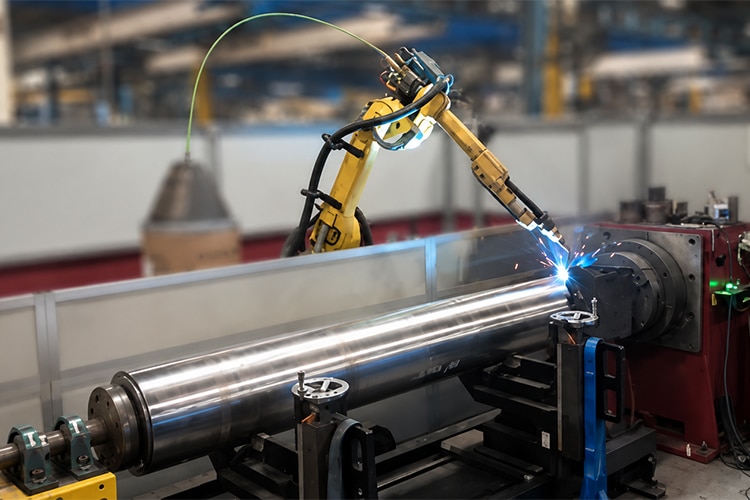
What Hydraulic Cylinder Remanufacturing Includes
Remanufacturing evaluates the complete cylinder against defined criteria before returning it to service.
A Typical Remanufacturing Process

Inspection may include rod straightness, rod surface condition, bore wear, piston and gland fit, seal surfaces, and structural integrity.
Remanufacturing can also reduce replacement lead time for large-bore, custom, legacy, and low-volume cylinders when the core remains suitable for reuse.
What Returned Cylinders Reveal
Returned cylinders provide physical evidence of field operating conditions.
Common patterns include:
- Rod scoring: contamination, side loading, or inadequate protection
- Seal damage: pressure spikes, heat, contamination, or thermal cycling
- Corrosion: environmental exposure or insufficient protection
- Uneven wear: alignment, mounting, or loading issues
Documenting these findings can improve rebuild standards, maintenance practices, sealing selections, and future designs.
Remanufacturing vs. Repair
| Standard Repair | Remanufacturing |
|---|---|
| Addresses the immediate failure | Evaluates the complete cylinder |
| Replaces failed components | Evaluates parts for reuse, restoration, or replacement |
| May use job-specific judgment | Uses defined inspection criteria |
| Returns the cylinder to operation | Applies consistent rebuild standards |
| Testing varies | Includes defined pressure and functional testing |
Where Remanufacturing Makes Sense
Remanufacturing is especially valuable when cylinders are costly to replace, difficult to source, common across a fleet, or critical to equipment uptime.
Typical applications include:
- Construction and utility equipment
- Mining equipment
- Mobile hydraulic machinery
- Industrial hydraulic systems
- Custom and large-bore cylinders
- Legacy equipment with long replacement lead times
Texas Hydraulics can evaluate both Texas Hydraulics and competitive cylinders when the returned core meets structural and dimensional requirements.
Reuse What Meets Specification
Rods, tubes, pistons, heads, glands, and other components may be reused or restored when they meet defined acceptance criteria. Components that do not meet requirements are repaired or replaced.
This approach can help reduce material waste, unnecessary replacement, cost, and lead time.
Building a Repeatable Remanufacturing Program
Consistent results require more than machining capability.
A strong program includes:

For OEM applications, requirements can also be aligned with the original cylinder design, tolerances, interfaces, performance requirements, and test criteria.
Start With the Application
The right remanufacturing approach depends on factors such as:
- Duty cycle and operating pressure
- Service environment
- Contamination exposure
- Loading and alignment
- Failure history
- Equipment life and uptime requirements
- Number of cylinders in service
These factors help determine how the cylinder should be inspected, rebuilt, tested, and supported over time.
Extend Cylinder Service Life
Whether you support one critical cylinder, a fleet of machines, or an OEM equipment platform, Texas Hydraulics can help determine the right remanufacturing approach.
Discuss a Remanufacturing Program